
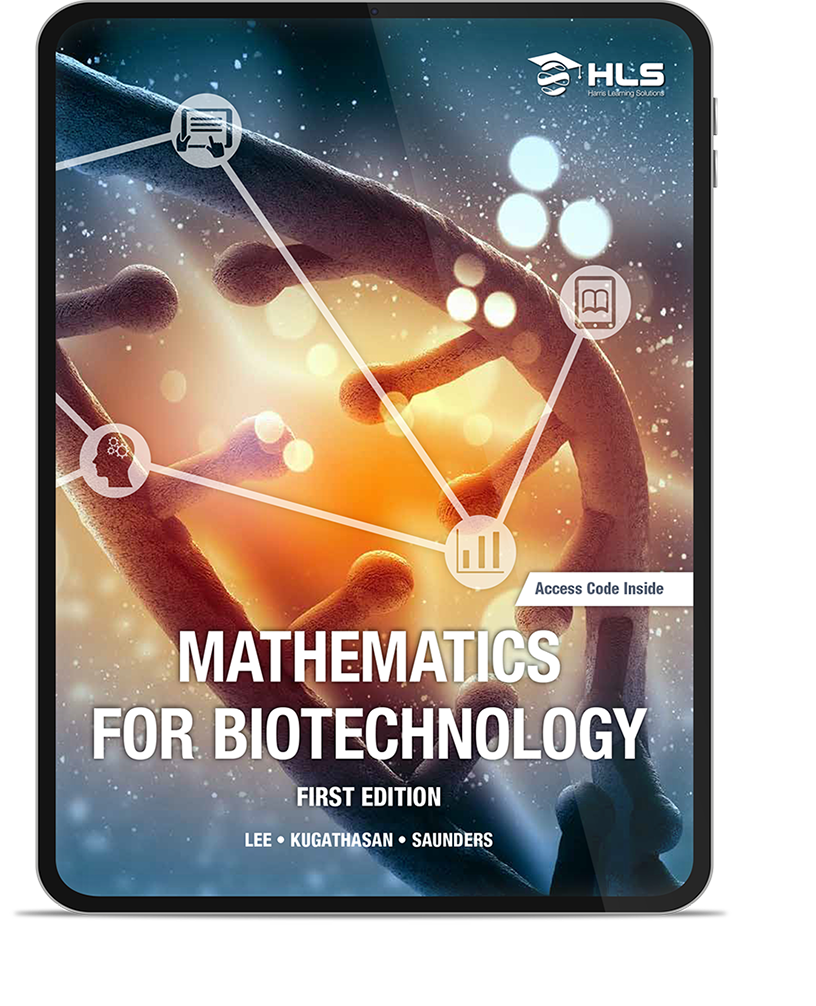
The Mathematics for Biotechnology resource builds up the statistical concepts required in the field of biotechnology from scratch. New ideas and concepts are accompanied by a discussion whereas the more challenging concepts are given more time and emphasis with numerous worked examples. It includes an e-textbook, algorithmic assessments powered by a test bank with over 500 unique questions, solution manuals, PowerPoint presentations, and real-time performance dashboards to view individual or class performance.
The Mathematics for Biotechnology resource is authored by Sean Saunders of Sheridan College, Thambyrajah Kugathasan of Seneca College, and Irene Lee of Humber College. To request access to the demo course, click here.
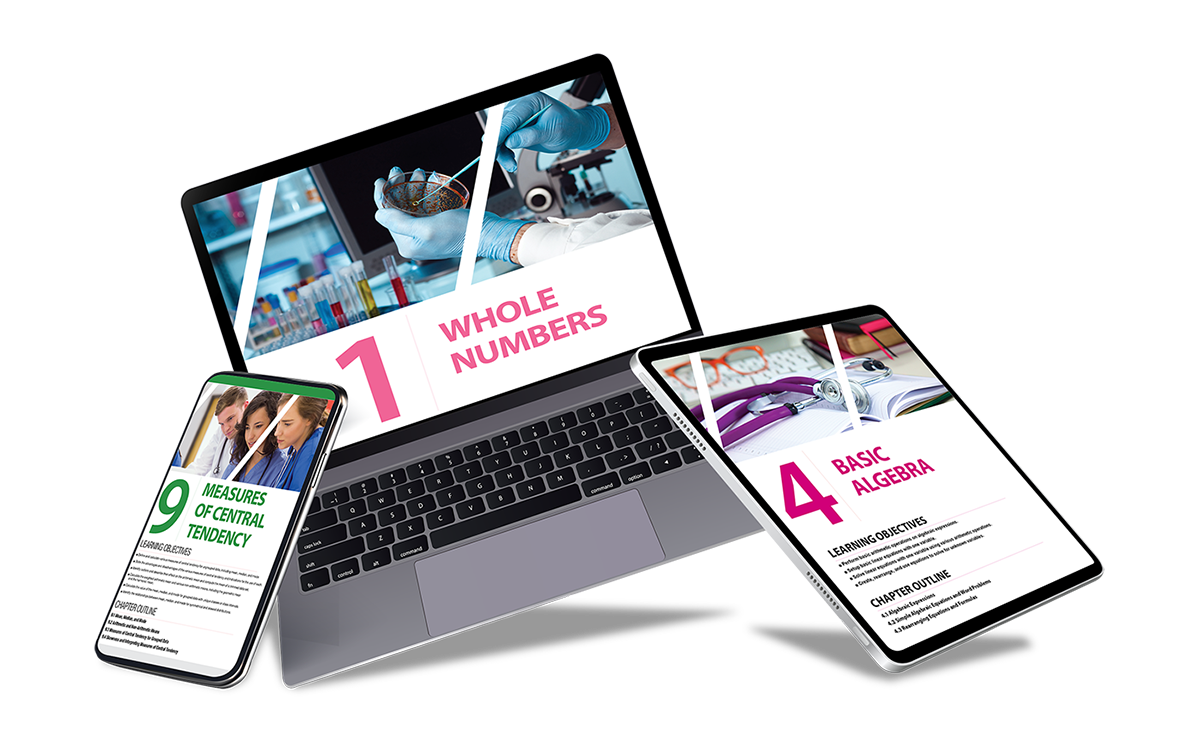
In this book, you will find that the main concepts and ideas are presented with a health science motivation, right from the start. Throughout each section, examples are provided that relate to the health sciences and reinforce the statistical concept being explained. At the end of each section, there are dozens of exercises to practice and master the concepts, with most or even all of the examples connecting directly to practical scenarios and situations that arise in the health sciences field, whether in nursing, pharmacy, athletic therapy, kinesiology, or in paramedical services.
Unlike many applied statistics textbooks in a particular field that expect prerequisite statistical knowledge and experience, this book builds up from scratch the statistical concepts that are presented and used within. As new ideas and concepts are introduced, a thorough overview and explanation of each is provided, along with a discussion as to why it should matter to students, and examples to clarify the main ideas. The more challenging concepts are given more time and emphasis, with the examples provided being broken down into smaller pieces along the way, so students can see how each individual statistical concept relates to the larger practical scenario being analyzed. When formulas are introduced, they are accompanied by a brief explanation or simple proof to provide a better understanding of not only how to use the formula to solve a problem, but why a particular formula is used in each situation.

The interactive lessons provide students with a unique Assessment for Learning experience. Through a step-by-step, mastery-based approach, students understand core concepts. The lessons contain numerous pedagogies that break-down concepts into micro-steps that help students to visualize, conceptualize, and enjoy the learning process.
The lessons are modular in nature and can be customized to a large degree based on the learning plan of each instructor or the course. Students will be required to unlock (master) key concepts, through built-in feedback mechanisms, before they sequentially proceed to understanding higher level concepts. This mastery-based approach has not only proven to help students to review concepts before tests and exams but also to prepare them prior to attending class.
Through an intuitive administration panel, instructors have the ability to select and customize lessons. They can set start and close dates, provide date extensions for individual students or for the entire class, set, download, or override marks. They can also view their student or class performance on any concept to tailor the in-class focus on concepts with which students are experiencing difficulties. This method has successfully proven to increase student retention and success at numerous academic institutions across the country.
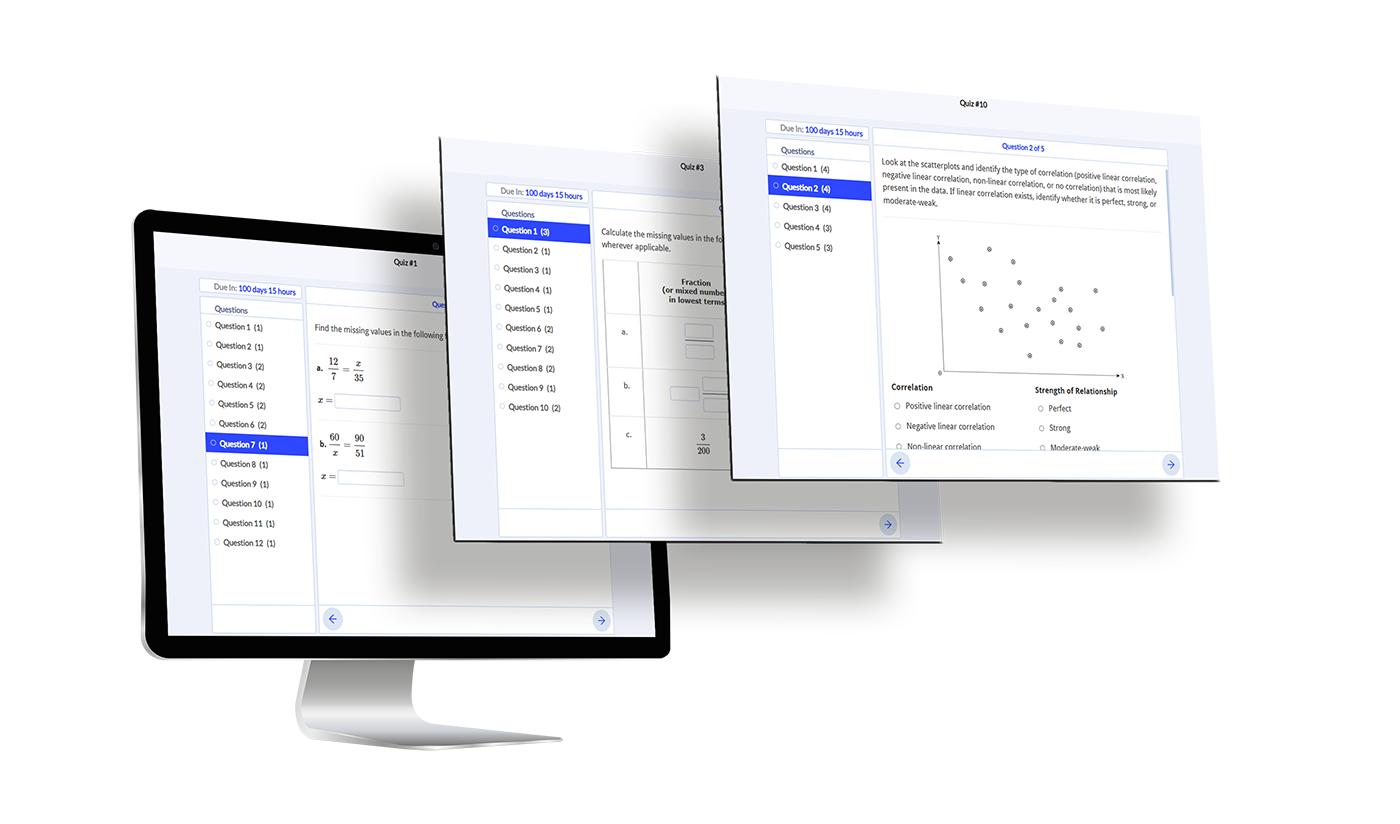
Harris Learning Solutions assessments are designed to not only test students but also to teach them to solve problems using intuitive methods, illustrations, and pedagogies. The assessments contain interactive timelines, problems that are algorithmically generated, options to learn using alternative methods, and related reference links to concepts in the e-textbooks and lessons.
In addition to providing students with the ability for unlimited practice on each question, the assessments provide dynamic feedback based on the entered answer. The assessments are built using an intelligent logic that provides students with an experience that is as close as possible to a real test. For example, in addition to unique error tolerances, if a student enters an incorrect answer by making a minor error (but has used the correct method to solve the problem), the system will recognize this and provide the student with a partial mark based on the extent of correctness.
The online assignments can be customized by the instructors or administrators to create a secure and accessible assessment environment for hosting tests and exams. The online test and exam settings have been developed to provide a high level of security. Features such as setting a password, restricting feedback and marks, and questions shuffling, can be activated to minimize student collaboration.
Through an intuitive administration panel, instructors have the ability to select and customize assessments. They can set start and close dates, provide date extensions for individual students or for the entire class, set, download, or override marks. They can also view their student or class performance on any question to tailor their in-class focus on concepts with which students are experiencing difficulty. This method has successfully proven to increase student retention and success at numerous academic institutions across the country.
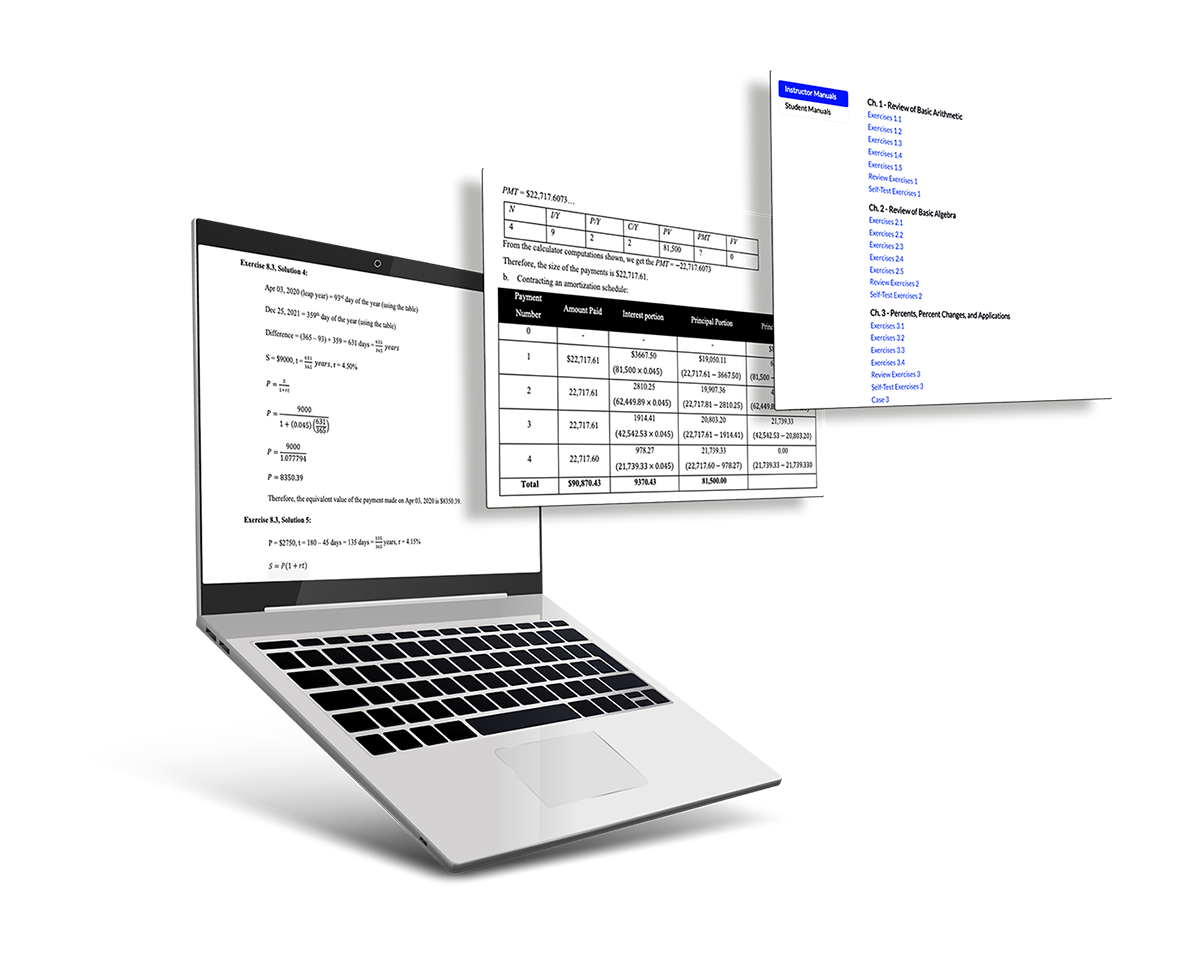
The solution manuals are available online for instructors and students. They contain solutions to problems using detailed step-by-step methods as demonstrated in the solved examples present in the textbook. The manuals are in a word format and can be downloaded and modified by instructors as required.
The instructor manuals contain detailed solutions to every section exercise, review exercise, and self-test exercise problem.
The student manuals contain detailed solutions to the odd numbered section exercise and review exercise problems. The manuals also contain detailed solutions to every self-test exercise problem.
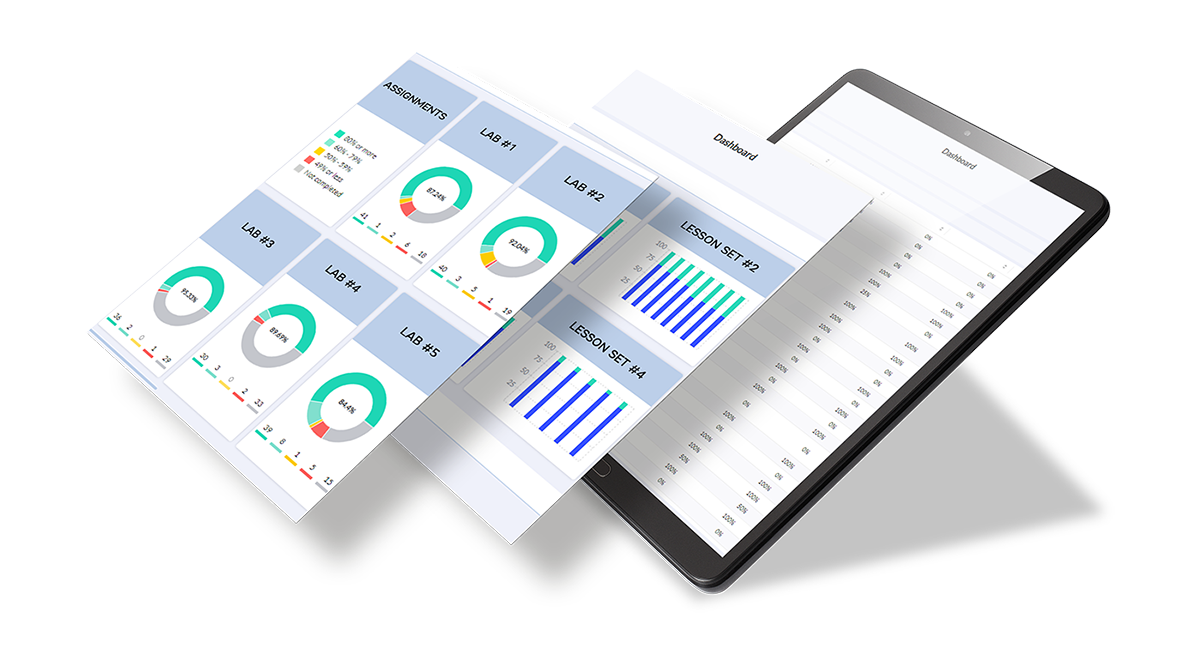
Harris Learning Solutions dashboards provide a real-time visual understanding of individual student and overall class performance as they progress through the lessons and assessments. The dashboards are used by both students and professors to identify the areas of weakness, and to improve the in-class and self-study focus.
The instructor dashboard provides a real-time visual understanding of individual student and overall class performance as they progress through the lessons and assessments. While viewing lesson performance, instructors can see the average completion percent per chapter, including a lesson-by-lesson percent completed visualization for the entire class.
While viewing assessment performance, the dashboard provides instructors with the average percent mark on each assignment, test, or exam. They can also see the highest mark and average mark secured on every question. This helps to identify the specific concept that an individual student or the entire class is having difficulty understanding. Instructors can also view the individual submission from each student, question by question. In this view, they can review and override marks as needed. Instructors can also download or export individual grades for lessons and assessments to a spreadsheet or synchronize the grades to the institution’s learning management system.
The student dashboard provides students with a visualization of their progress on their lessons and assessments. From their dashboard they can see their chapter completion marks, including a lesson-by-lesson percent completed visualization, as well as their marks on their assignments, tests, or exams. These visualizations allow students to see their performance over time, which helps them to determine their areas of strength and concepts that require more work to master.
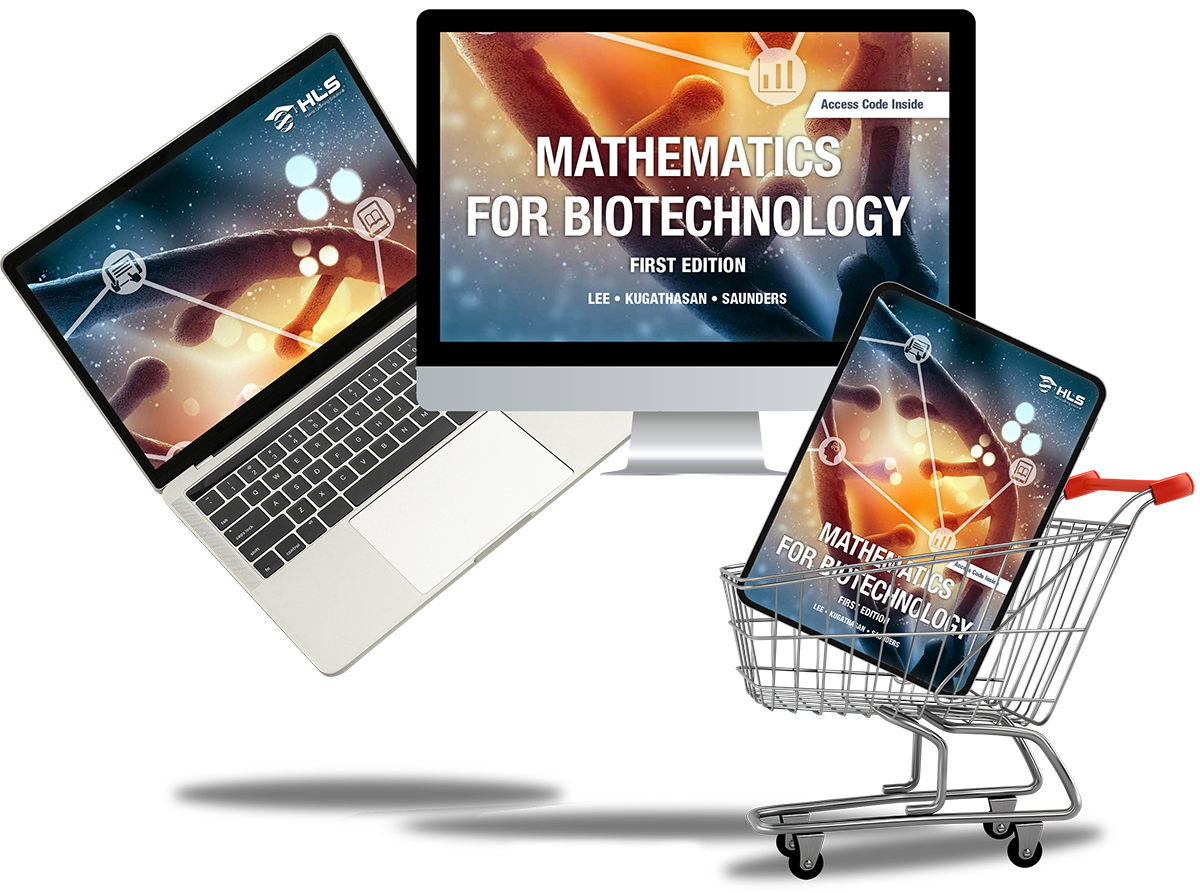
The Mathematics for Biotechnology resource is available in a digital format on Intromath. The Intromath package will provide full access to the online resources, including lessons, assessments, PowerPoint presentations.
The following are the details to place an order for the resource:
Title: Mathematics for Biotechnology, First Edition
Authors: Sean Saunders, Thambyrajah Kugathasan, Irene Lee
For detailed pricing information and customized quote, please contact our team here.
Prices provided do not include taxes and shipping. These will be extra.