
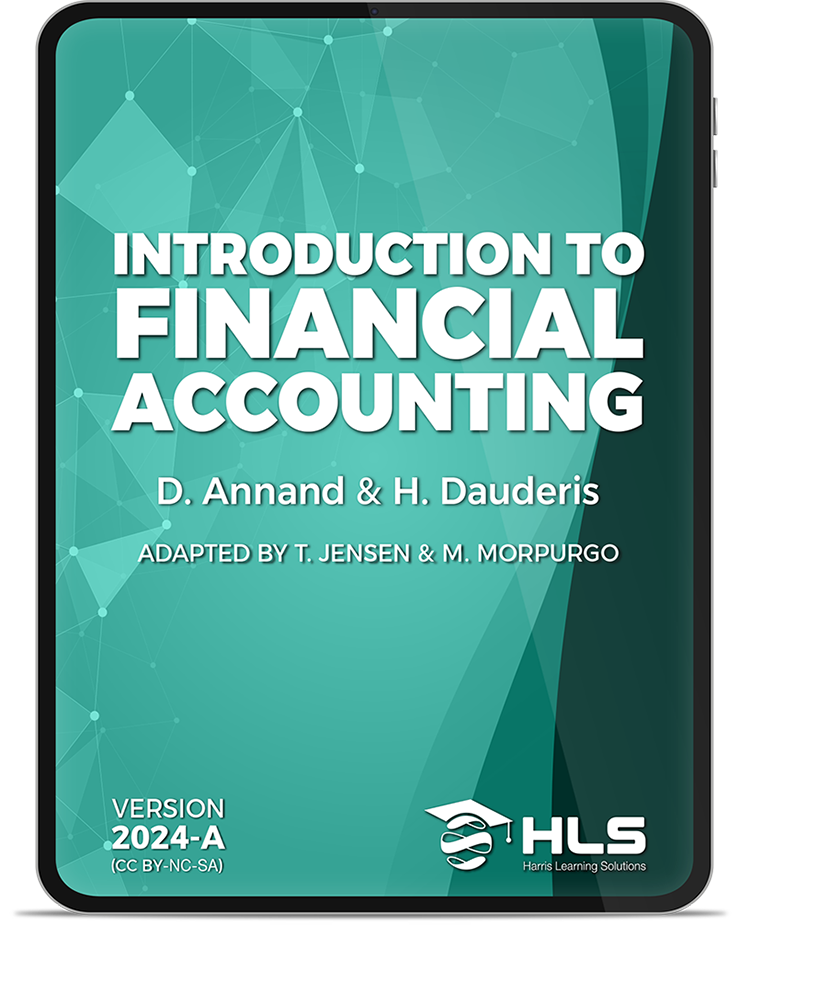
Our Introduction to Financial Accounting open-text resource has been designed for introductory financial accounting programs. The textbook focuses on core introductory financial accounting topics that match pre-requisite requirements for students advancing to Intermediate Financial Accounting. It includes an interactive e-textbook, algorithmic assessments powered by a test bank with over 300 unique questions, interactive explorations, in-depth case studies, solution manuals, instructional videos, animated PowerPoint presentations, and real-time performance dashboards to view individual or class performance.
The Introduction to Financial Accounting resource has been authored by D. Annand and H. Dauderis, extensively edited by Athabasca University and reflects current International Financial Reporting Standards (IFRS). To request access to the Introduction to Financial Accounting resource, click here.
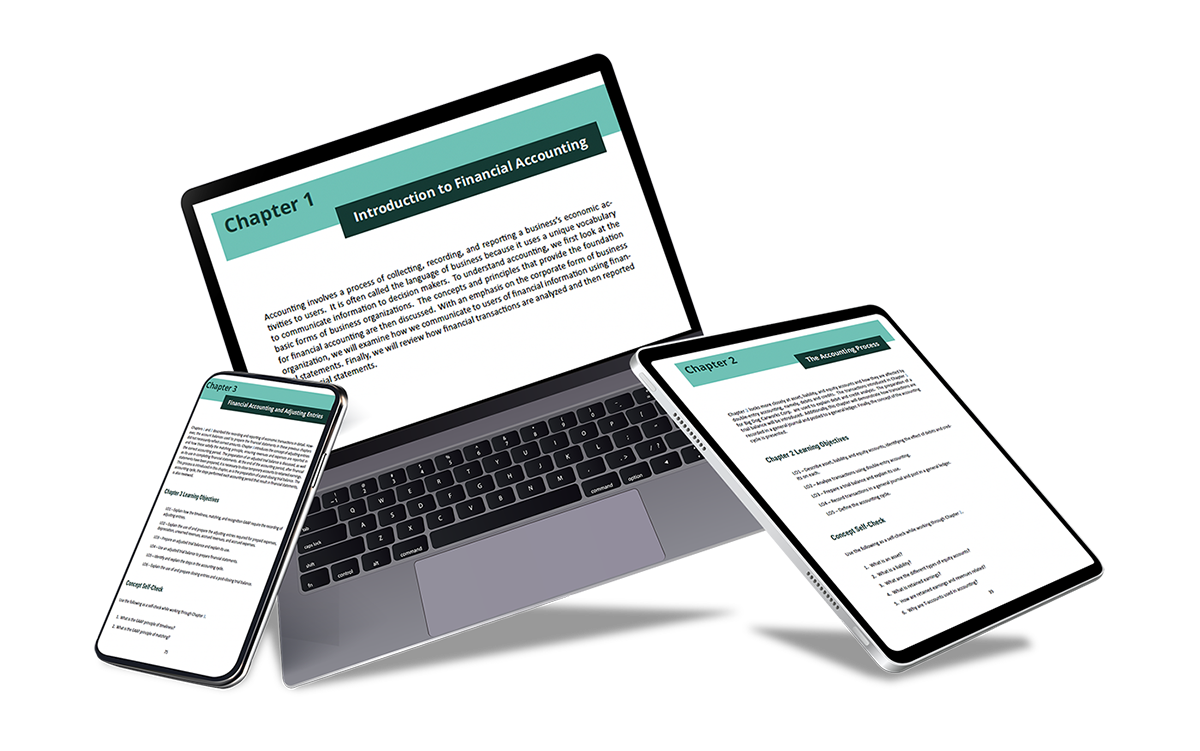
The textbook focuses on core introductory financial accounting topics that match pre-requisite requirements for students advancing to Intermediate Financial Accounting. The textbook covers all essential topics, including: the accounting cycle; merchandising; assigning costs to inventory; cash and receivables; property, plant and equipment; debt financing; equity financing; statement of cash flows; financial statement analysis; and proprietorships and partnerships.
A corporate approach is utilized versus beginning with a sole proprietorship emphasis and then converting to a corporate approach. Excluded are advanced topics that are covered in Intermediate Financial Accounting, such as leases and bond amortization.
Detailed solutions to discussion questions, exercises and problems are provided at the end of the e-textbook for those adopting the Harris Learning Solutions assessment.
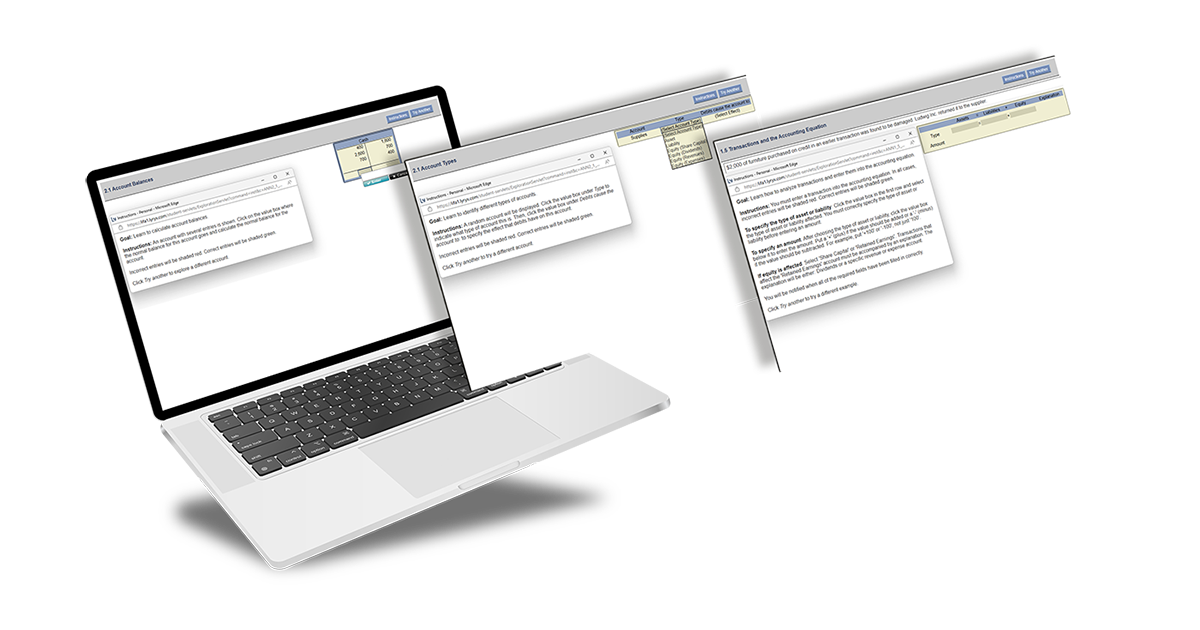
The explorations provide students with a valuable opportunity to delve into key concepts and build a deep understanding through concrete, interactive examples. These activities are thoughtfully embedded within the textbook, seamlessly integrating with the content to enhance the learning experience. Designed to foster engagement and curiosity, explorations allow students to experiment with different approaches and solutions in a hands-on manner. Unlike labs, explorations are ungraded, meaning that marks are not recorded. This encourages students to practice and refine their skills in a stress-free environment, promoting a growth mindset where they can learn from mistakes without the pressure of assessments. By being an integral part of the textbook, explorations guide students to explore concepts more thoroughly, leading to a stronger grasp of the material.
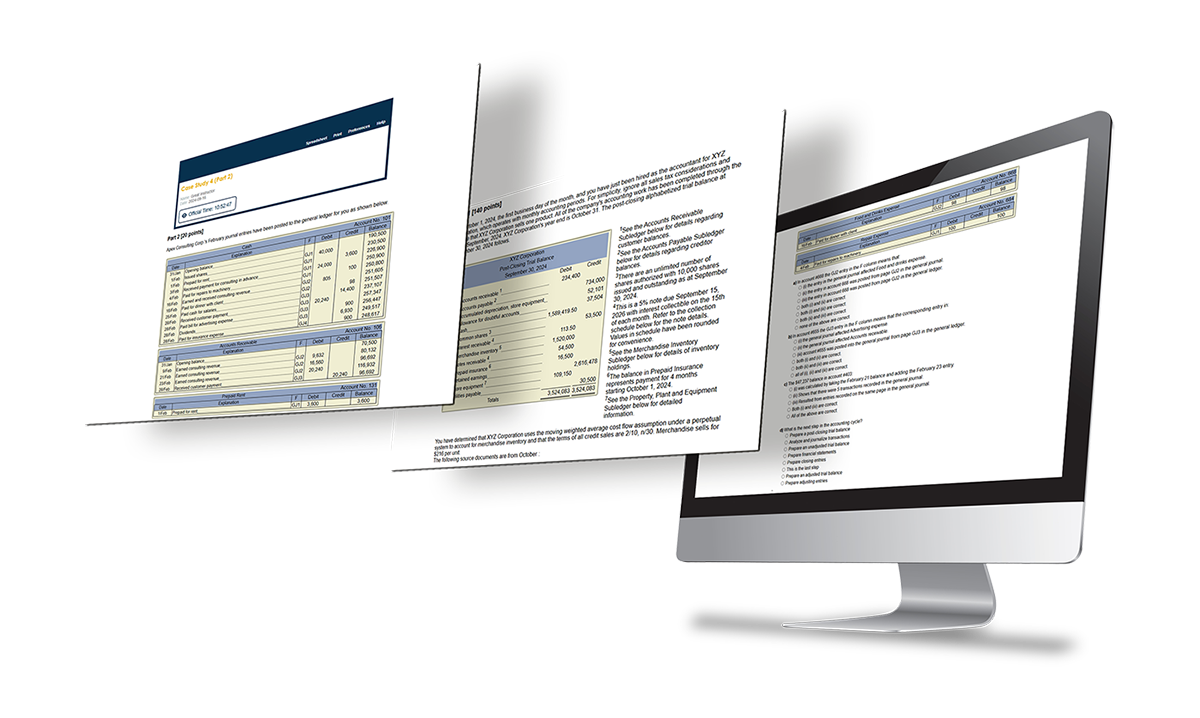
To complement assignments and examinations, Harris Learning Solutions offers two Case Studies as part of its Financial Accounting products. These Case Studies provide a unique opportunity for an in-depth exploration of the subject, enabling students to engage with complex scenarios that involve multiple interconnected components requiring careful analysis and problem-solving. Successful completion hinges on a comprehensive understanding of the relevant material, as students must apply their knowledge and critical thinking skills to navigate and resolve the challenges presented. Each case study is divided into several parts, with each segment building on the previous one, encouraging the development of a well-rounded and cohesive analysis. These Case Studies are versatile and can be effectively used as course projects or as integral components of capstone examinations.
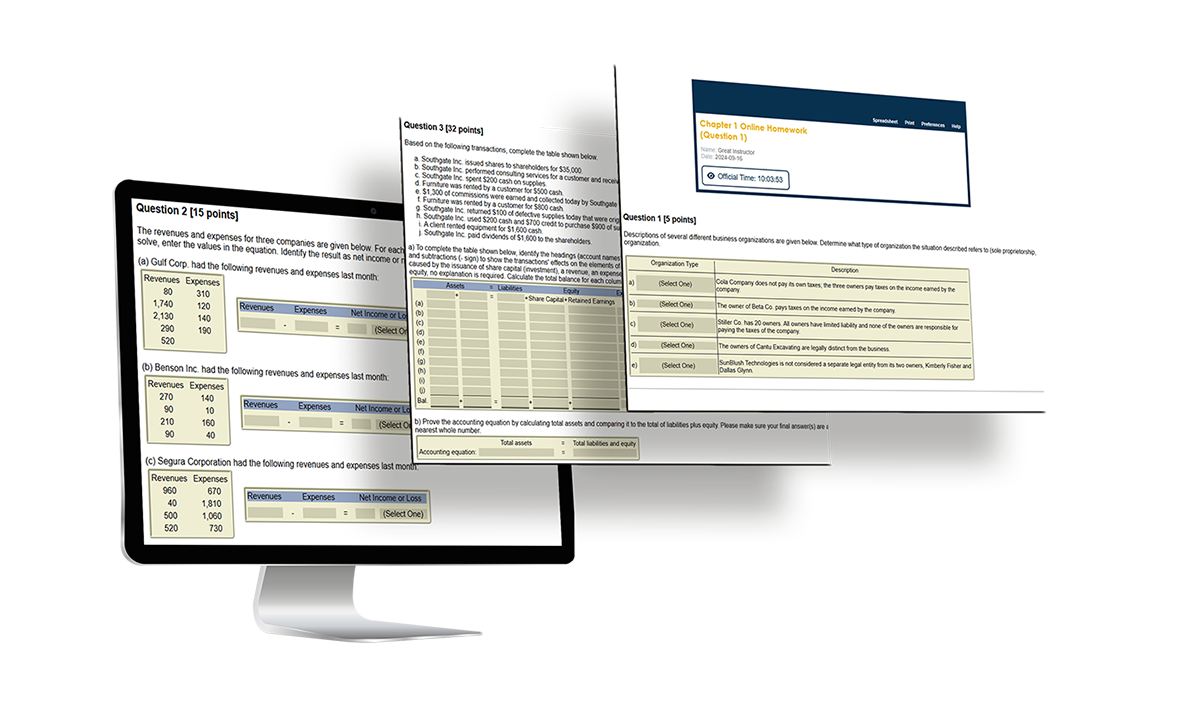
Harris Learning Solutions has been developing online formative and summative assessment (homework and exams) for more than 20 years combined, and as with the textbook content, questions and problems are regularly reviewed and updated.
Students receive immediate personalized feedback on their mistakes to guide their learning. Student grade reports and performance statistics are also provided, and full LMS integration, including gradebook synchronization, is available.
Harris Learning Solutions assessments are designed to not only test students but also to teach them to solve problems using intuitive methods, illustrations, and pedagogies.
Detailed solutions to discussion questions, exercises and problems are provided at the end of the e-textbook for those adopting the Harris Learning Solutions assessment.
Have a look and try an interactive question in our Online Homework and Examination system. Submit for grading and feedback once complete.
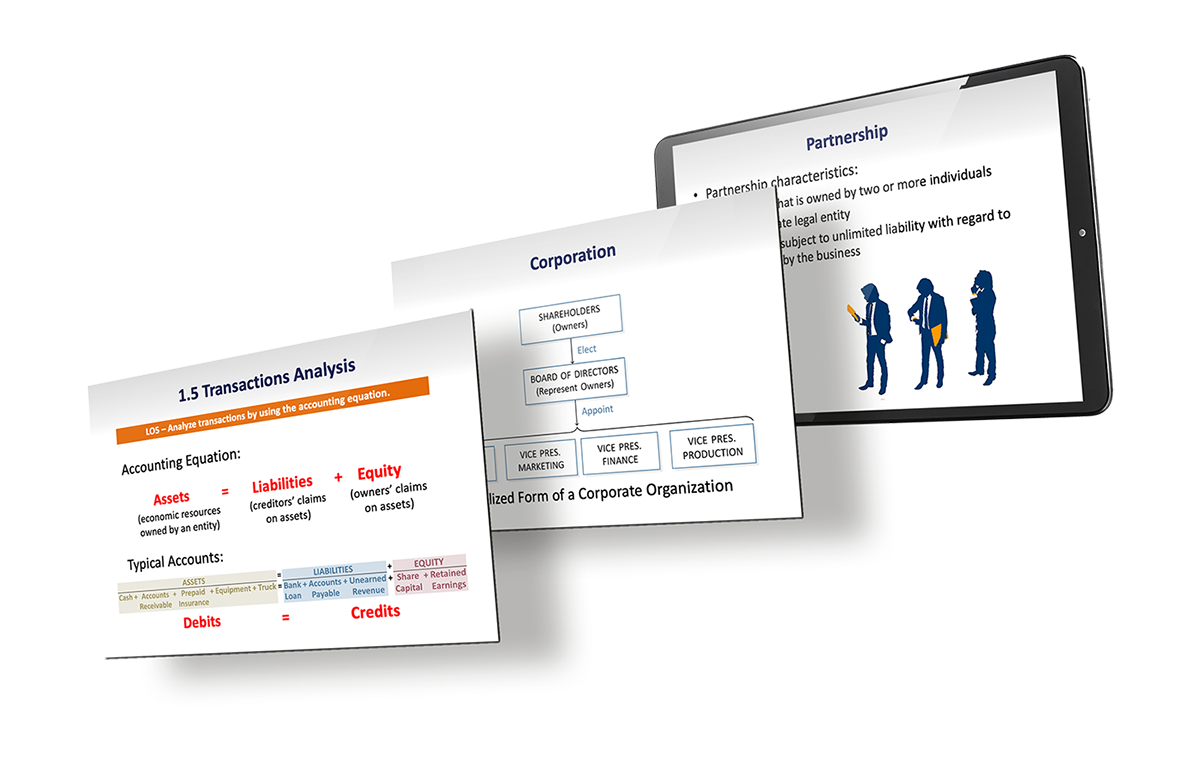
The PowerPoint presentations (PPTs) are designed to teach every concept in the textbook. Steps in teaching concepts appear one by one through the creative use of animations to provide students with an inclusive learning experience. Instructors have the option of downloading and making modifications to any of the PPTs.
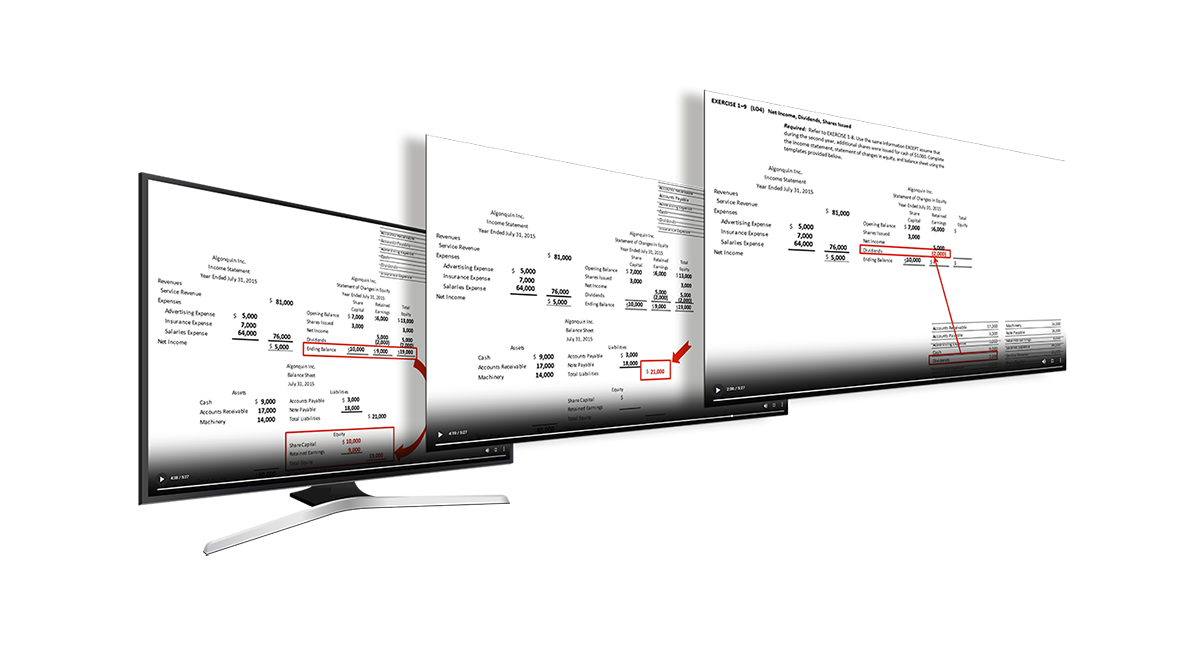
The instructional videos are designed to guide students through exercises and clearly explain concepts step by step. The videos are prepared in collaboration with Athabasca University and refer directly to the examples in the book. Over 100 instructional videos are available for the Financial Accounting resources hosted by Harris Learning Solutions. Experience this feature in action and watch a sample instructional video.
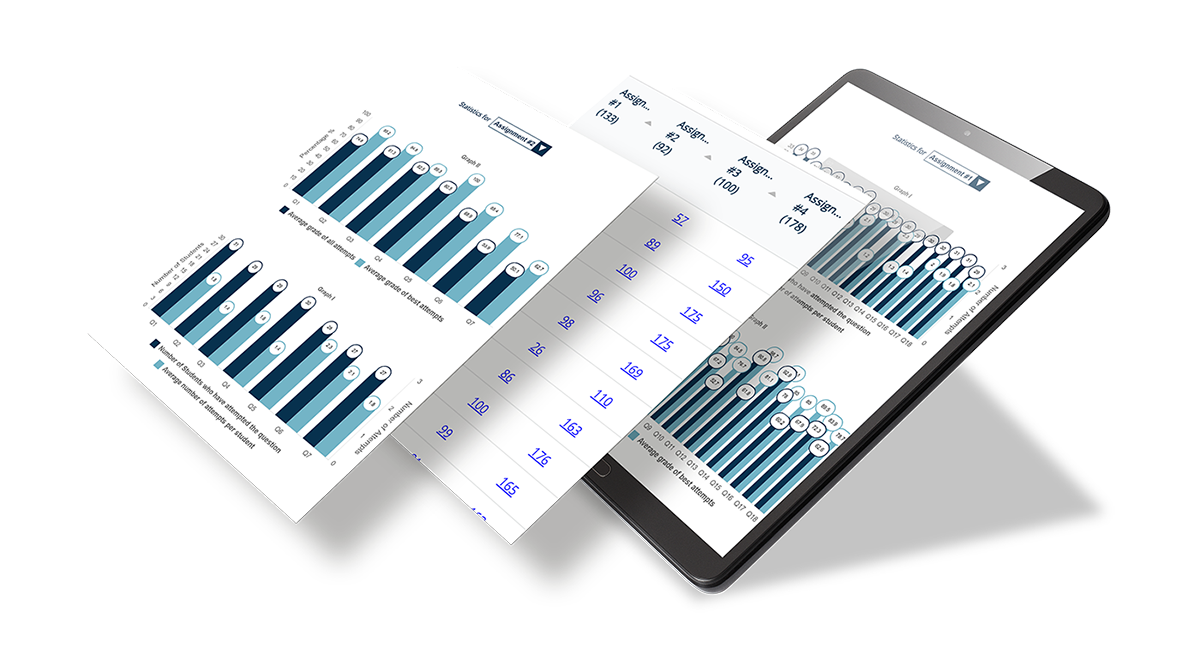
Harris Learning Solutions dashboards provide a real-time visual understanding of individual student and overall class performance as they progress through the lessons and assessments. The dashboards are used by both students and professors to identify the areas of weakness, and to improve the in-class and self-study focus.
The instructor dashboard provides a real-time visual understanding of individual student and overall class performance as they progress through the course. While viewing assessment performance, the dashboard provides instructors with the average percent mark on each assignment, test, or exam. They can also see the highest mark and average mark secured on every question. LMS integration available through LTI 1.3 protocol, compatible with platforms such as Blackboard, D2L, Canvas, Moodle, and more.
Introduction to Financial Accounting is an Open Education Resource (OER). All content is reviewed and updated regularly by subject matter experts, and the texts are adaptable; custom.
The Introduction to Financial Accounting resource is available in a digital format on Apollo. The package will provide full access to the online resources, including assessment, slides, instructional videos, exercises, detailed solutions to discussion questions, exercises and problems, explorations, and case studies.
The following are the details to place an order for the resource:
Title: Introduction to Financial Accounting, Edition 2024-A
For detailed pricing information on Apollo digital resource package and customized quote, please contact our team here.
Printed copies are available on demand through Lulu. Click here to order.